
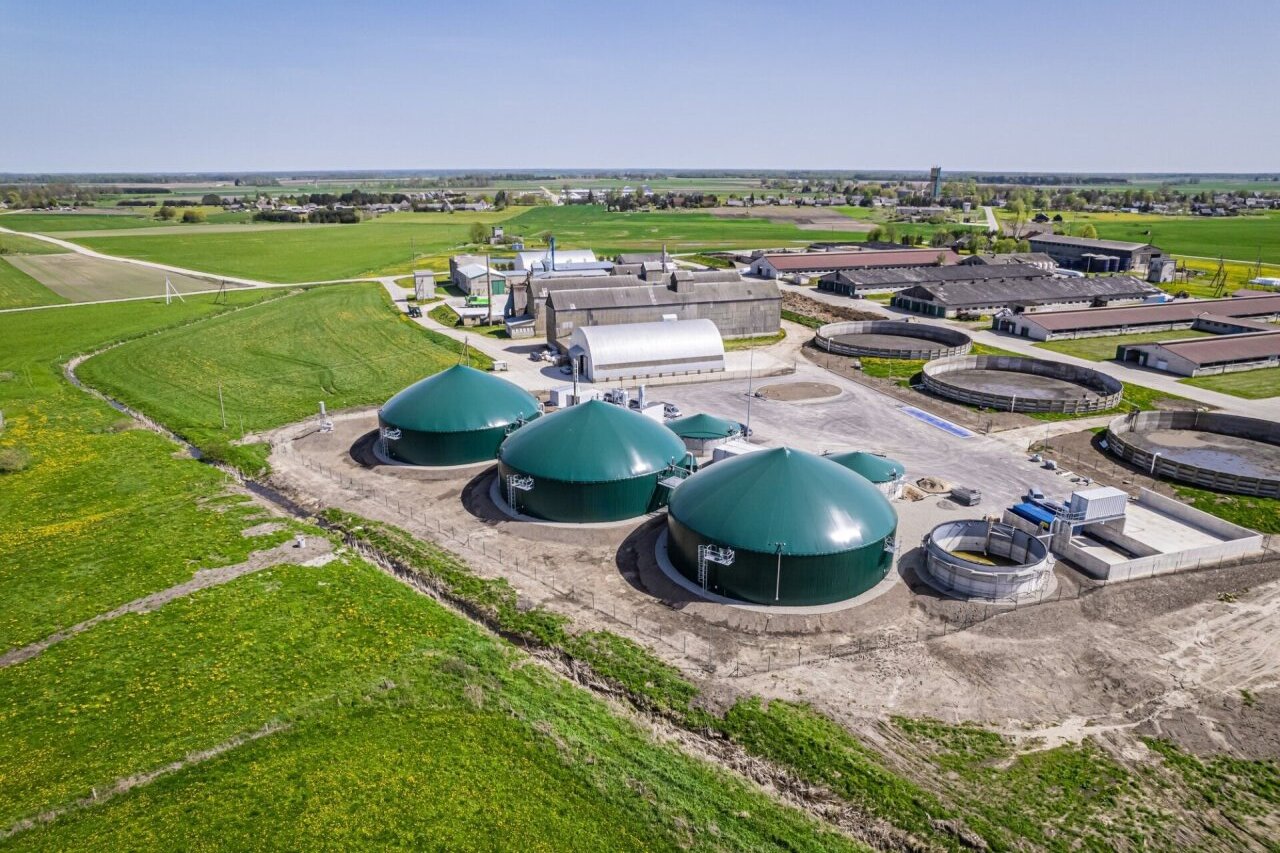
The biomethane sector in Lithuania is steadily growing. At the beginning of 2026, there were 12 biomethane plants operating in the country, with a total production capacity of 67 MW. Of these, five plants are directly connected to the “Amber Grid” gas transmission system, another six supply biomethane to the “Amber Grid” transmission system via tanker trucks through injection points, and one plant is connected to the gas distribution network.
In February of this year, a record amount of guarantees of origin was issued for biomethane produced in Lithuania—more than 32.9 GWh, compared to 27.1 GWh in January. This is 2.4 times higher than during the same period last year, when 12.6 GWh of guarantees of origin were issued in February 2025 and 12.3 GWh in January. For comparison, the amount of biomethane produced in Lithuania in February would be sufficient to cover cooking needs for around 85,000 households.
At the end of 2025, the renewable gas guarantees of origin registry administered by “Amber Grid” joined the European AIB (Association of Issuing Bodies) platform, designed for the exchange of guarantees of origin between European registries. This improved the operations of Lithuanian businesses in the European green gas market and enabled both the export of biomethane produced in Lithuania and its import from other countries.
“We are pleased to see our efforts paying off and the rapidly increasing volumes of guarantees of origin for Lithuanian biomethane. We observe growing production capacities in our country, rapidly expanding infrastructure, and active participation by Lithuania in international green gas trading. Joining the AIB platform allows us to smoothly and efficiently transfer and receive guarantees of origin between European countries according to commonly agreed rules. This enables domestic producers to participate more actively in international green gas trading, promotes the development of the biomethane business in Lithuania, and benefits the national economy,” says the CEO of “Amber Grid,” Nemunas Biknius.
Currently, biomethane produced in Lithuania accounts for about 2% of the country’s total gas consumption. However, the National Energy Independence Strategy sets out ambitious plans for the expansion of this sector—by 2030, biomethane production is expected to reach 1.4 TWh and account for nearly 10% of the country’s gas consumption.
The majority—around 99%—of biomethane produced in Lithuania is currently used in the transport sector as a sustainable fuel. The remaining share is used by companies seeking to increase the use of green energy in their operations.
As biomethane usage grows, infrastructure is also expanding rapidly. Currently, there are 16 biomethane refueling stations operating in Lithuania—in major cities as well as in Marijampolė, Telšiai, and the Pasvalys district. A year ago, there were only six such stations.
Lithuania uses not only domestically produced biomethane but also imports it—mainly from the Netherlands and Denmark. At the same time, Lithuanian biomethane is successfully exported to the Czech Republic, the United Kingdom, and other member states.
In February 2026 alone, 15.2 GWh of biomethane was imported into Lithuania, while 24.9 GWh was exported. Compared to the previous year, imports increased by 1.7 times, while exports grew by as much as 3.3 times. The growth in exports was driven by the connection of new biomethane plants in Lithuania and more favorable conditions for cross-border transfers of guarantees of origin via the AIB platform.
According to experts, the biomethane market in Lithuania will continue to grow rapidly, making meaningful use of manure generated in agriculture, as well as industrial and food waste.

