
Biogas is a type of renewable fuel produced from biodegradable feedstocks such as food waste, manure and other agricultural waste. Its production forms part of the circular economy – organic waste is used to generate energy while reducing uncontrolled methane emissions into the atmosphere. Biogas can be used for electricity and heat generation or, once upgraded, as a fuel for transport and other energy purposes.
Biogas consists of between 45% and 75% methane, while the remainder is mainly CO₂ and other impurities. Once biogas is upgraded to biomethane that meets natural gas quality requirements, it can be used as a substitute for natural gas and injected into the gas system.
The European Commission’s REPowerEU Plan assigns an important role to biomethane in reducing the EU’s dependence on fossil fuels and strengthening energy security. The Plan sets a target of reaching annual biomethane production of 35 billion m³ in the EU by 2030.
Biomethane production and injection into the gas transmission system are already taking place in Lithuania, and the sector continues to expand. Biomethane producers can connect their production facilities to the gas transmission system and supply the biomethane produced to the market. The renewable origin of biomethane is certified through guarantees of origin, which facilitate trade in renewable gases in Lithuania and other European markets.
The development potential of Lithuania’s biomethane sector is supported by the transport decarbonisation measures established in the Law on Alternative Fuels. By 2030, Lithuania aims to increase the share of renewable energy in the transport sector to at least 29% by increasing transport electrification, promoting the use of gaseous fuels produced from biomass and hydrogen, and increasing the use of biofuels. This creates favourable conditions for the development of biomethane production and the connection of new biomethane production facilities to the gas network.
Connecting a biomethane production facility to the gas transmission system may require the construction of an additional pipeline section between the production facility and the transmission network. When planning a project, it is important to assess the potential connection point and the required infrastructure, and to ensure the necessary rights to construct and operate it.
Amber Grid enables biomethane producers to connect to the gas transmission system and provides information on possible connection solutions, applicable requirements and the connection process. If you are planning to develop a biomethane production project and inject biomethane into the gas transmission system, we invite you to contact us.
Biomethane that meets the established requirements can be supplied to the natural gas transmission system or distribution systems.
The gas transmission system in Lithuania is shown on the map below:
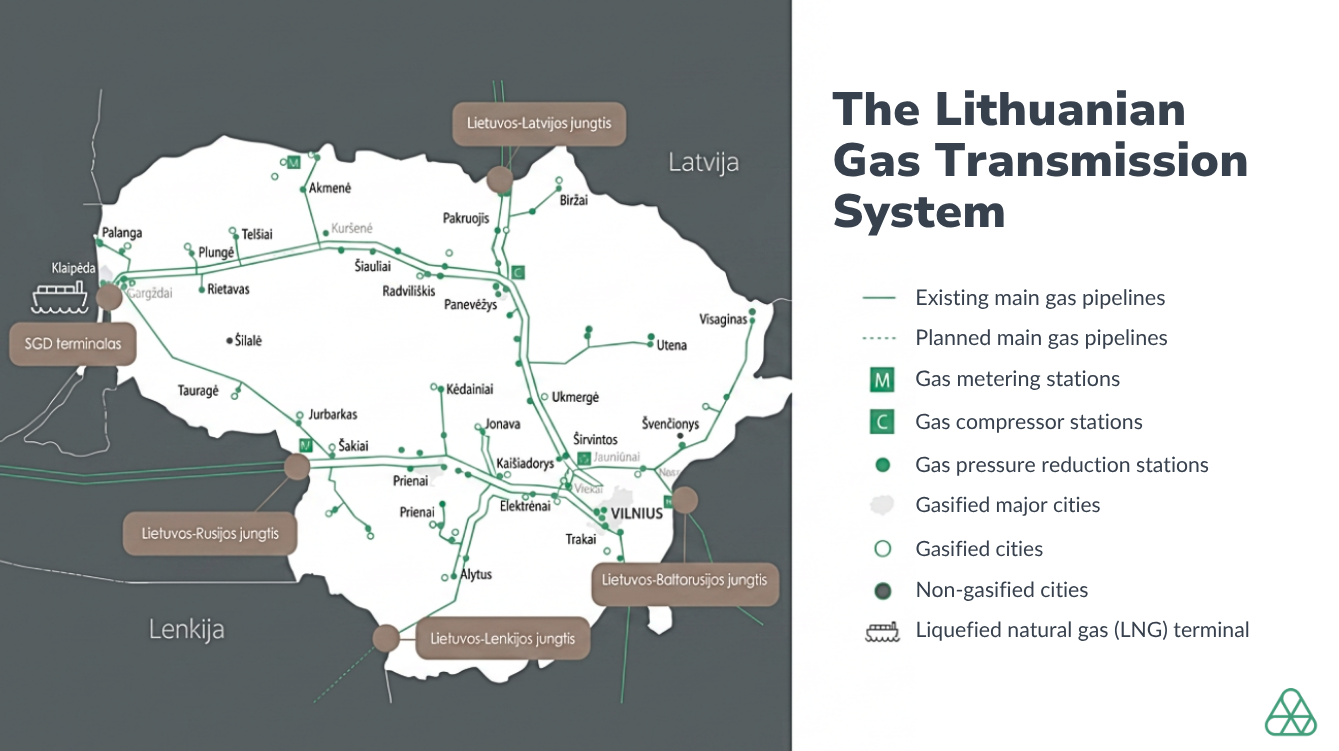
Detailed information on connecting biogas production facilities and biomethane injection points from gas trucks to the Amber Grid gas transmission system can be found HERE.
If you have additional questions related to biomethane, please contact us by email: biometanas@ambergrid.lt

